The FAANG interview process has 5 stages.
On this page
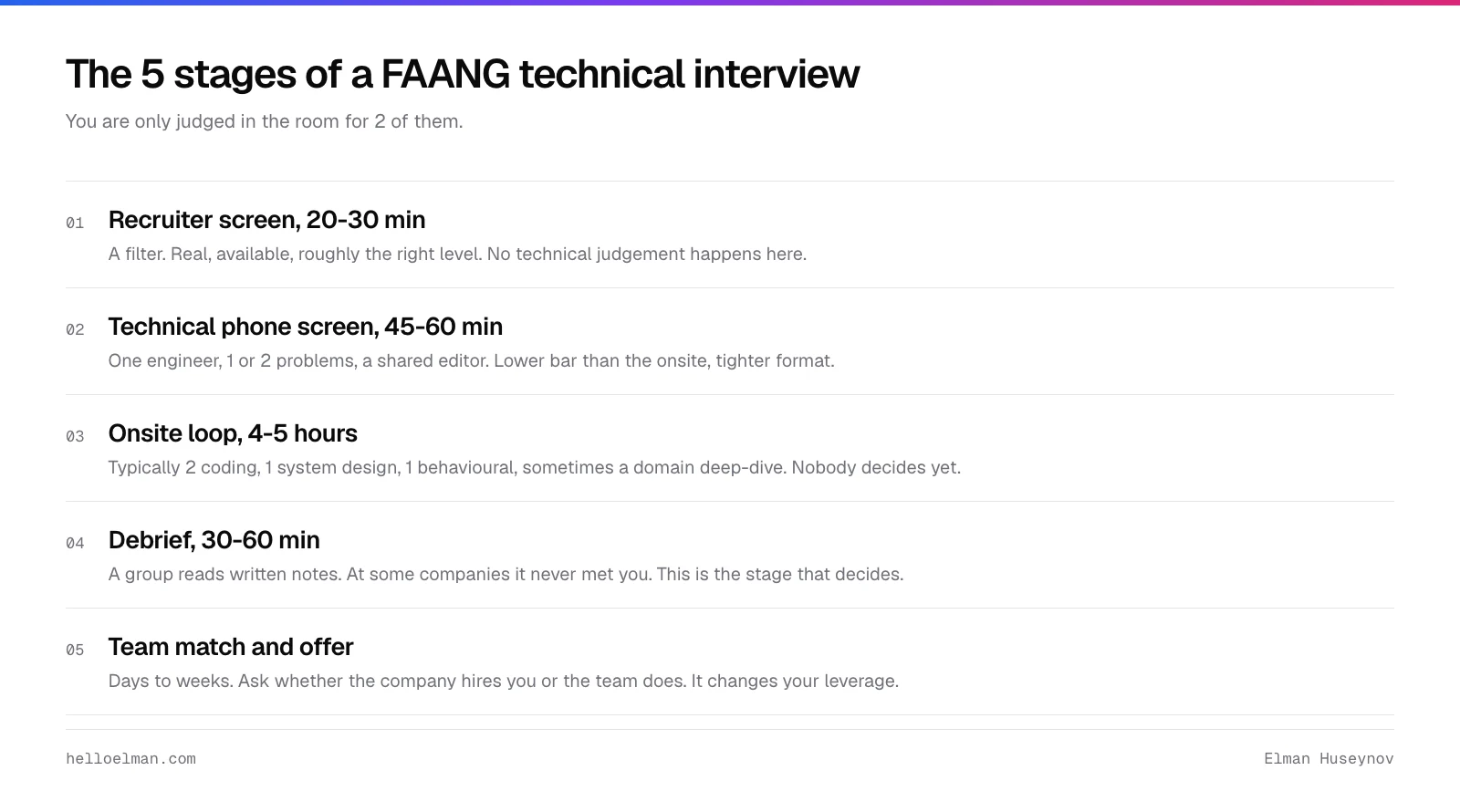
A recruiter screen, a technical phone screen, an onsite loop of 4 or 5 rounds. Then a debrief, and team match.
The decision happens in the debrief, from written notes, by people who never met you.
I have run 100+ interviews and sat in the debriefs that follow them.
The 8-week FAANG interview prep plan is the companion post.
Who decides a FAANG interview offer?
A FAANG interview offer is decided by a group that reads written notes.
At Google that group is a hiring committee that never met you. At Amazon a Bar Raiser holds a veto.
Your interviewers write up what happened, and the group decides from that.
| Stage | Length | Who decides |
|---|---|---|
| Recruiter screen | 20-30 min | Recruiter |
| Technical phone screen | 45-60 min | 1 engineer |
| Onsite loop | 4-5 hours | Nobody yet |
| Debrief or hiring committee | 30-60 min | A group, from written notes |
| Team match and offer | days to weeks | Hiring manager and recruiter |
The strength of that written evidence depends on how easy you made their job.
Stage 1: the recruiter screen
A filter, 20 to 30 minutes. The recruiter checks that you are real, available and at the right level.
Two mistakes cost people this stage: a salary number given first, and a vague level.
Ask the recruiter what the loop looks like. Most candidates never do.
Stage 2: the phone screen
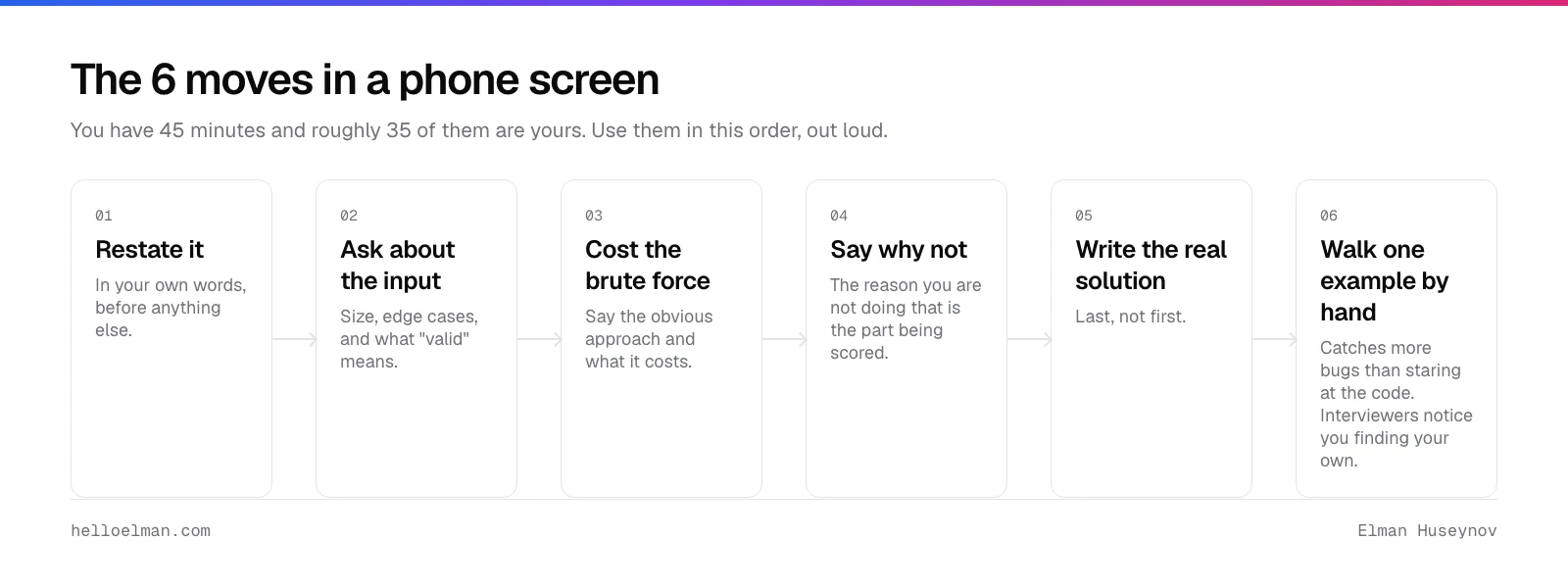
One engineer, 1 or 2 problems, 45 to 60 minutes in a shared editor. You pass by making your reasoning visible.
The phone interview questions post lists both calls and the 6 moves that pass them.
Stage 3: the onsite
4 to 5 rounds in a day. Typically 2 coding, 1 system design, 1 behavioural, sometimes 1 domain deep-dive.
FAANG coding interview questions
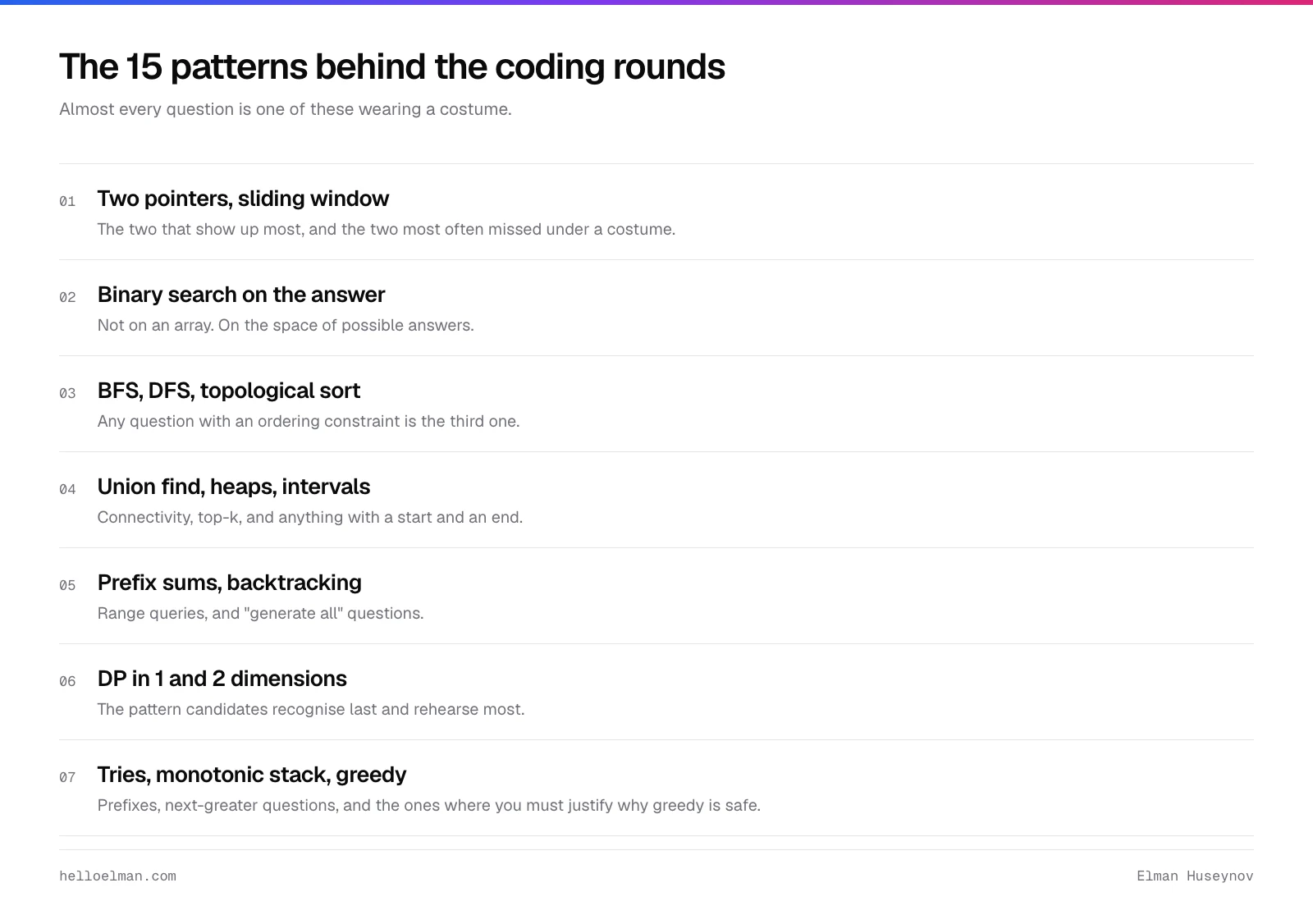
You are tested on what you do when the problem is new. Learn about 15 patterns rather than 300 problems.
Almost every question is one of those in a costume. AlgoPath trains the naming.
The system design round
Senior candidates lose offers here most often. They start designing before they know what they are designing.
Spend the first 8 minutes on requirements. Who uses this, how many, what must never break. Design to those numbers.
The full procedure is minute by minute.
FAANG behavioral interview questions
Weighted more heavily than candidates expect. At staff level it can decide the loop.
Write 8 stories. A conflict, a failure, a time you changed your mind, a time you cut scope.
Each story needs the situation, what you did, a number, and what you would change.
Stage 4: the debrief
Your interviewers write up their notes and meet. Reasoning they cannot rebuild from the notes does not exist.
At Google a separate hiring committee reads those notes without ever meeting you.
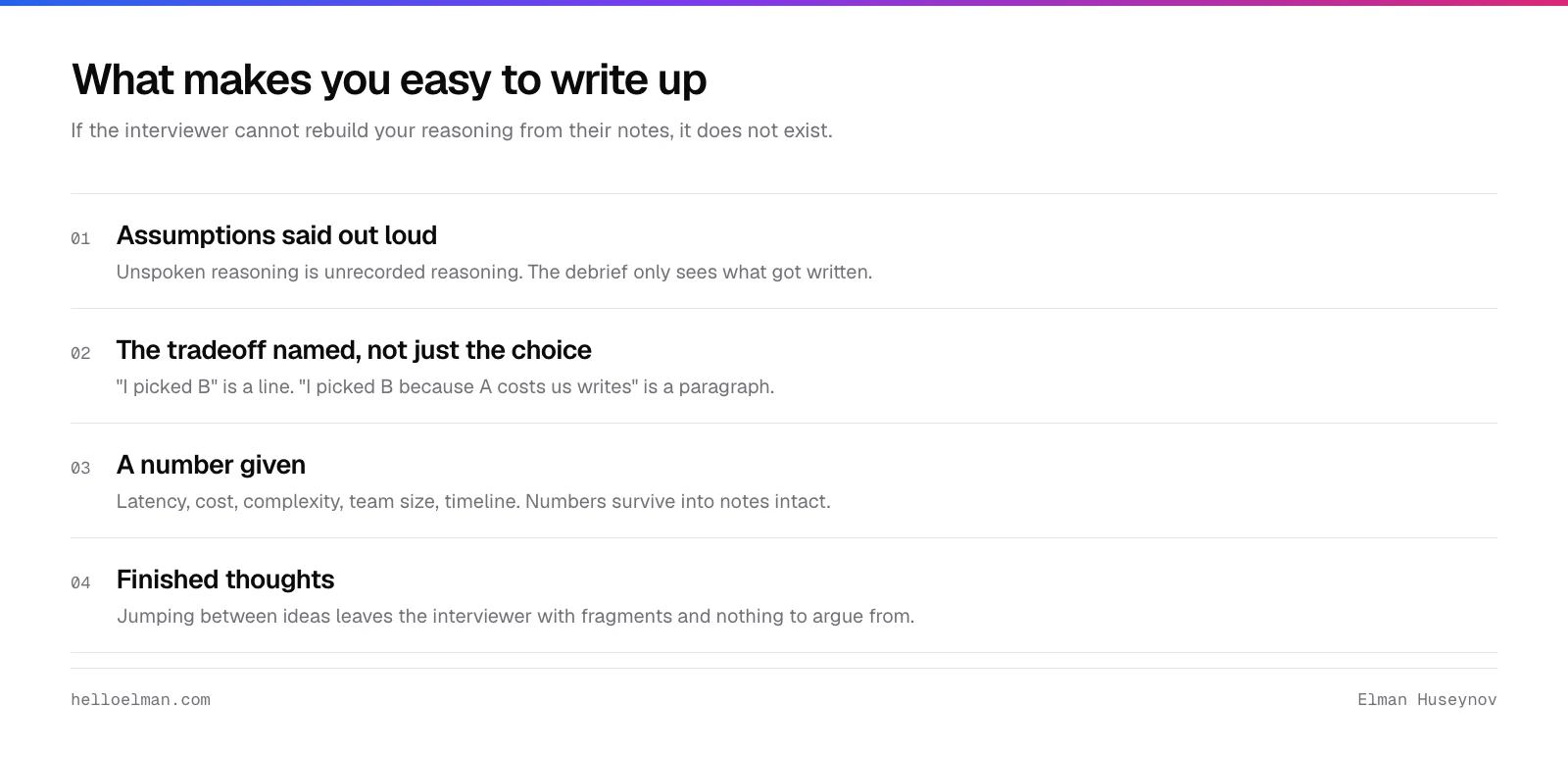
Things that make you easy to write up:
- You said your assumptions out loud, so they got recorded.
- You named the tradeoff, not just the choice.
- You gave a number: latency, cost, team size, timeline.
- You finished a thought before starting the next one.
Hard to write up: silences, jumping between ideas, “it depends” without saying on what.
Stage 5: team match and offer
Some companies hire you and then match a team; at others the team hires you. Ask which.
If the company hires you, you can turn down a team without losing the offer.
The first offer is rarely the last. What is negotiable goes well beyond base.
What gets people rejected in a FAANG interview?
FAANG interview rejections rarely say the candidate did not know the algorithm.
The rejection notes say: never clarified requirements, jumped to code, could not explain a choice.
Going quiet for 4 minutes is on the list too.
Every one is fixable in a week, and none are on LeetCode.
How long does a FAANG interview take?
A FAANG interview takes 6 to 10 weeks, from recruiter screen to signed offer.
The gaps between stages are longer than the stages.
Amazon and Meta move fastest. Google is slowest, because of the committee step.
Running several loops? Ask each recruiter to align the timing early.
Does a referral help?
A referral gets your CV read, and that is all. It does not survive a weak loop.
Ask people who have seen your work. More in the hidden job market is mostly referrals.
A referral from someone who never worked with you carries almost no weight.
Common questions
Can you fail one round and still get the offer?
Yes, and it happens often. One weak round out of 5 is survivable when the others are strong. And when the interviewer wrote up what you did well. 2 weak rounds usually ends it. At staff level a weak system design round ends it alone. That round carries the most weight.
How long should you wait before reapplying after a rejection?
Most of these companies set a 6 or 12 month cooldown. The recruiter will tell you which applies. The clock starts at the rejection, not the application. Use the time on the thing that failed. Reapplying with the same preparation produces the same debrief notes.
Does the level you interview for change the questions?
The coding questions barely change. Everything else does. At staff the system design round gets more ambiguous. The behavioural round asks about influence without authority. The bar for the debrief write-up is higher. Ask the recruiter which level you are targeting first.
What is a FAANG interview?
A FAANG interview is the hiring loop at Meta, Amazon, Apple, Netflix and Google. It has 5 stages. A recruiter screen, then a technical phone screen. Then an onsite of 4 or 5 rounds. Last come the debrief and team match. The debrief decides. You are not in the room for it.
The short version
The loop has 5 stages. The one that decides is the one you are not in.
Ask the recruiter for the format. Learn 15 patterns, not 300 problems.
Spend the first 8 minutes of system design on requirements. Write 8 behavioural stories with numbers in them.
Say your reasoning out loud so it survives into the notes.
For a scored run before the real one, book a mock interview. You get the same scorecard a real panel would fill in.