
A hiring committee is the group that decides your offer after the onsite.
On this page
The committee never met you. It reads the interviewers’ written notes and your CV.
Most candidates prepare for the rounds and never think about the room that decides.
I have run 100+ interviews and sat in the debriefs that follow them.
The FAANG interview guide covers all 5 stages. This post is stage 4.
Who sits on a hiring committee?
A hiring committee is usually 3 to 5 senior engineers and managers.
At Google, the committee members did not interview you.
At Amazon, the debrief includes a Bar Raiser from outside the hiring team. The Bar Raiser can veto a hire the team wants.
Every format reads the same input: the written notes from each round.
| Company | Who decides | Met you? |
|---|---|---|
| A hiring committee of senior staff | No | |
| Amazon | The debrief, with a Bar Raiser holding a veto | The interviewers did |
| Most smaller companies | The hiring manager, after a debrief | Yes |
What does the hiring committee read?
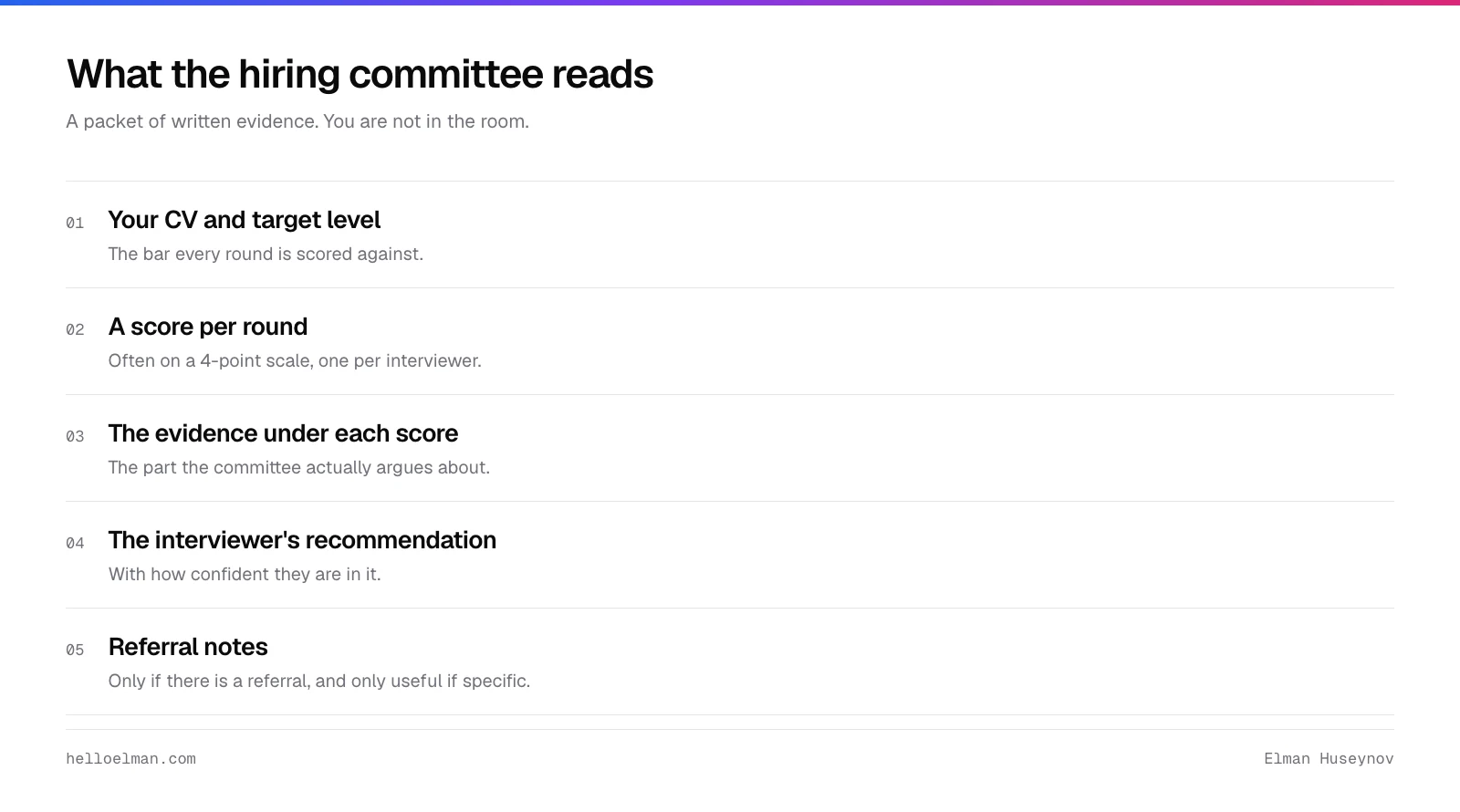
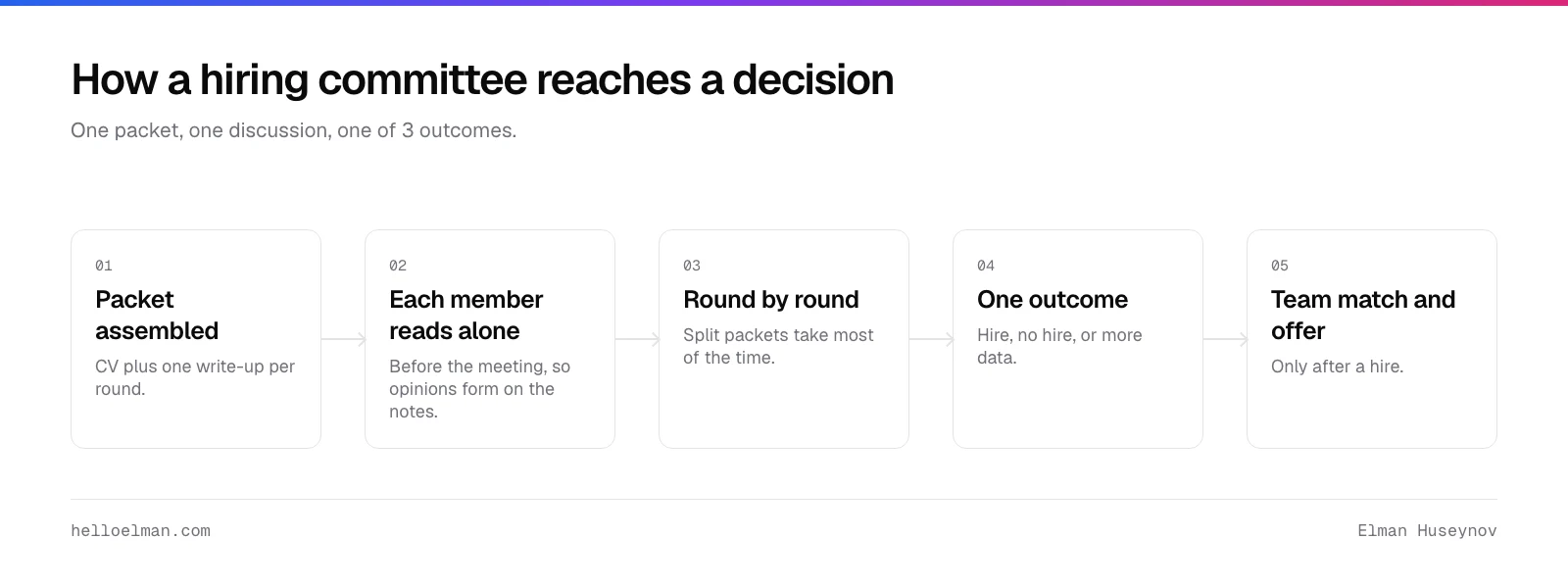
The hiring committee reads a packet: your CV and one write-up per round.
Each write-up has a score, the evidence behind it and the interviewer’s level.
The committee checks whether the evidence supports the score. A strong score with thin evidence gets discounted.
The packet usually holds 5 things:
- Your CV and the level you applied for.
- A score per round, often on a 4-point scale.
- The written evidence under each score.
- The interviewer’s own recommendation and confidence.
- Referral notes, if there is a referral.
The scorecard post shows the lines interviewers actually write.
How does the hiring committee vote?
The committee reaches one of 3 outcomes: hire, no hire, or more data.
More data means another round, usually the one with the weakest notes.
A split packet is where most of the discussion goes. One strong advocate in the notes can carry a borderline candidate.
Why do borderline candidates get rejected?
Borderline candidates get rejected when their notes cannot be defended in the room.
The committee member arguing for you only has what was written down.
A great answer the interviewer did not record is invisible. A clear note about a good answer carries real weight.
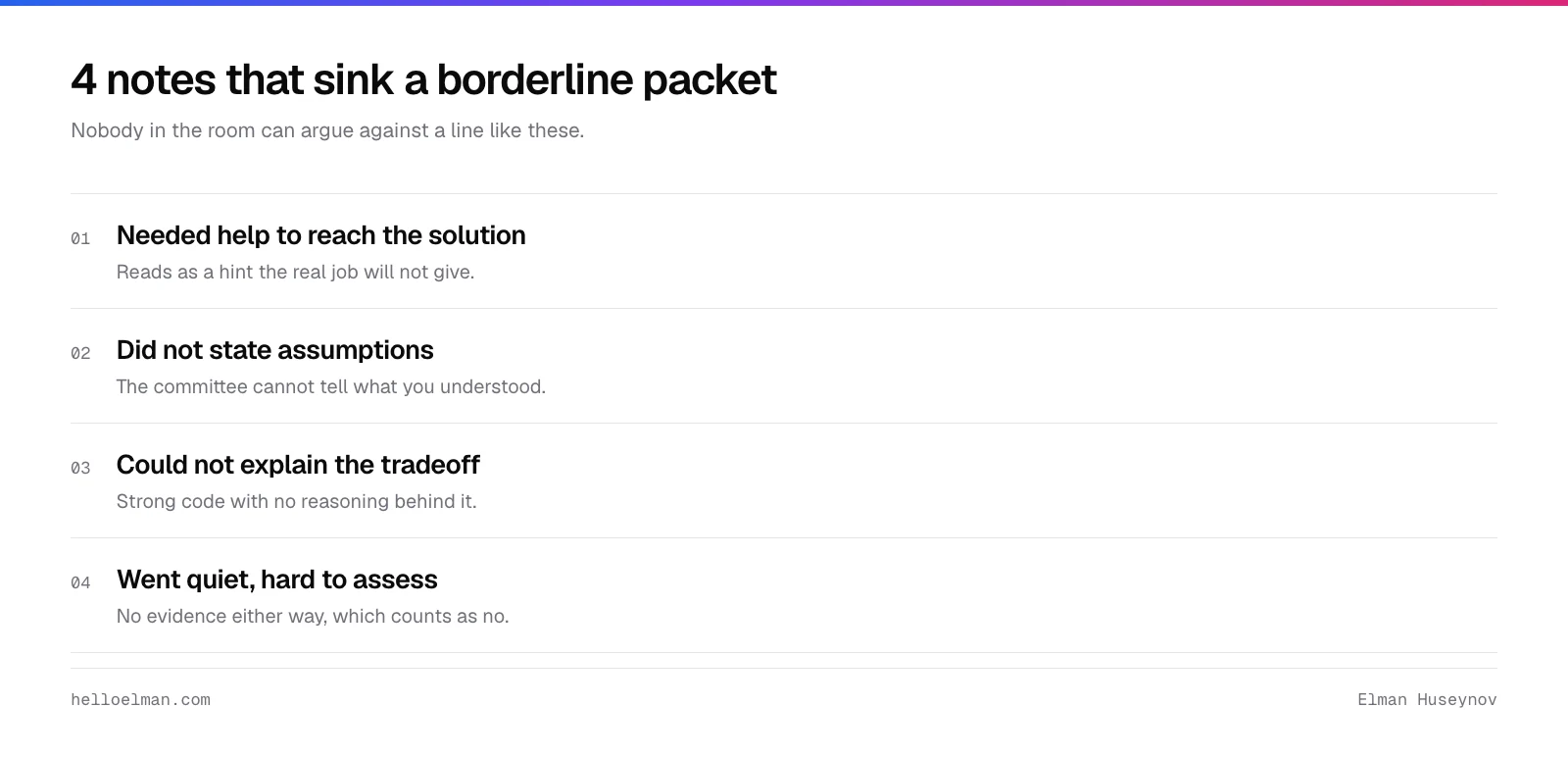
The notes that sink a borderline packet are predictable:
- Needed help to reach the solution.
- Did not state assumptions.
- Strong code, could not explain the tradeoff.
- Went quiet, hard to assess.
What makes you easy to defend in the hiring committee?
The committee defends candidates whose notes were easy to write.
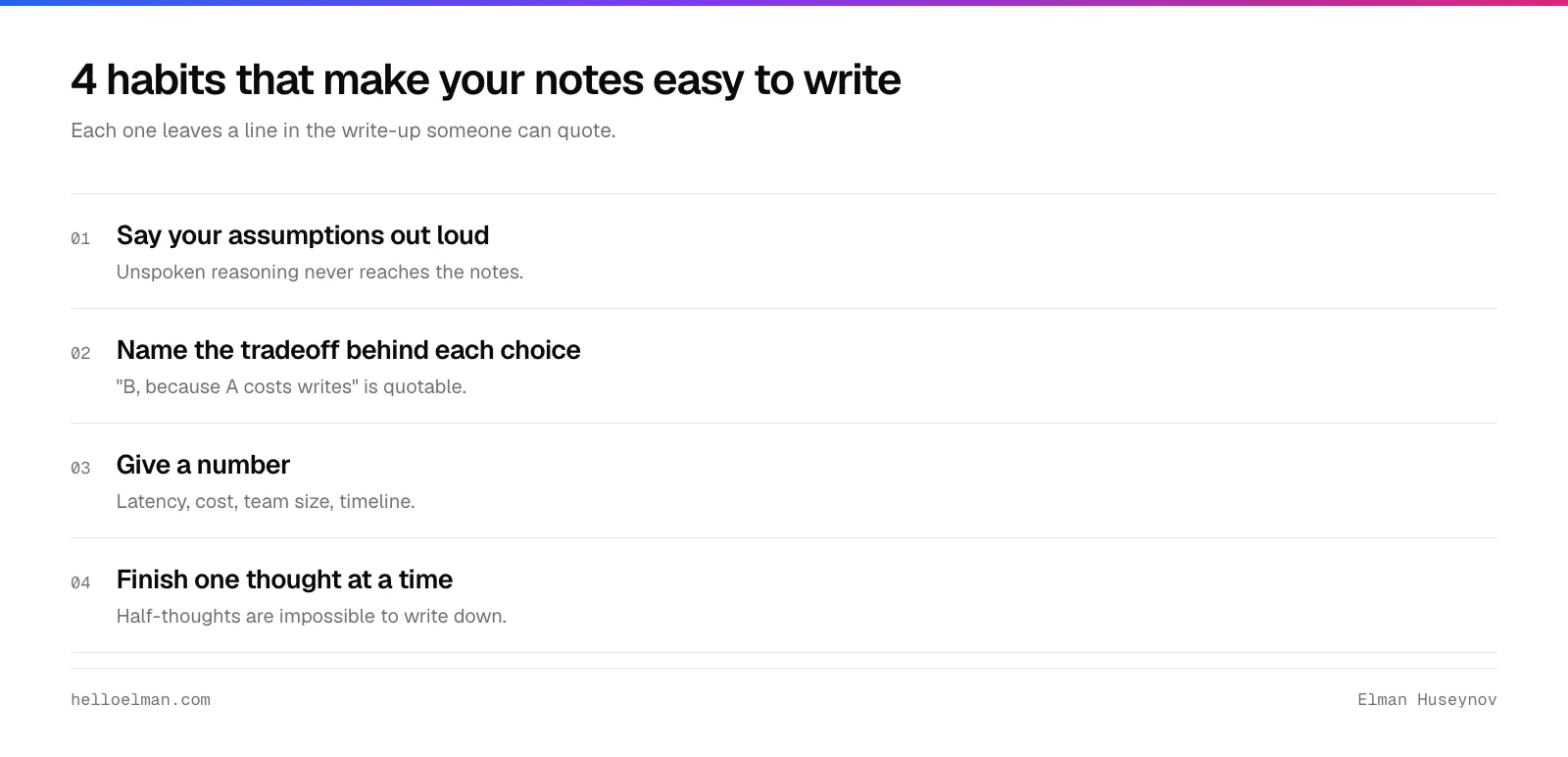
Easy notes come from 4 habits in the room, all of them practisable.
Each habit puts a quotable line in the write-up. The committee then argues from your own words.
- Say your assumptions out loud, so they get recorded.
- Name the tradeoff behind each choice.
- Give a number: latency, cost, team size, timeline.
- Finish a thought before starting the next one.
Smart Hiring covers the same meeting from the company side.
Common questions
Can the hiring committee overrule the interviewers?
Yes, the committee can overrule the interviewers. At Google it can reject a candidate every interviewer liked. The reverse happens too. The committee judges the evidence, and a score without evidence carries little weight. A unanimous yes with thin notes can lose to a split packet with detailed ones.
Can you see what the hiring committee wrote about you?
Candidates almost never see what the committee wrote. The notes are internal, and most companies share only the outcome. Some recruiters will give a one-line reason if you ask directly. Ask which round was weakest. That single answer tells you what to practise before you reapply.
How long does the hiring committee take?
Most hiring committees meet weekly. The decision takes 1 to 2 weeks after the onsite. Google is slower, because team match and a compensation review follow the committee. Amazon and Meta usually answer within a week. Ask the recruiter when the committee meets and plan other loops around it.
Does a referral reach the hiring committee?
A referral note goes into the packet at most companies, and the committee reads it. The note helps only when it describes work the referrer has seen. A referral from someone who never worked with you adds almost nothing. A referral never rescues weak interview notes.
What is a hiring committee?
A hiring committee is a group of senior staff that decides whether to hire you. The committee reads written notes from every interview round, plus your CV. At Google the members did not interview you. The decision comes before team match and the offer.
The short version
The hiring committee decides your offer from notes, without meeting you.
The notes are the only part of you that reaches the room.
State assumptions, name tradeoffs, give numbers, and finish each thought.
Each habit writes a line someone can defend for you.
For a scored run with the write-up included, book a mock interview. You get the same scorecard a real panel would fill in.