In a job offer negotiation, base is the hardest line to move. Internal equity constrains it.
On this page
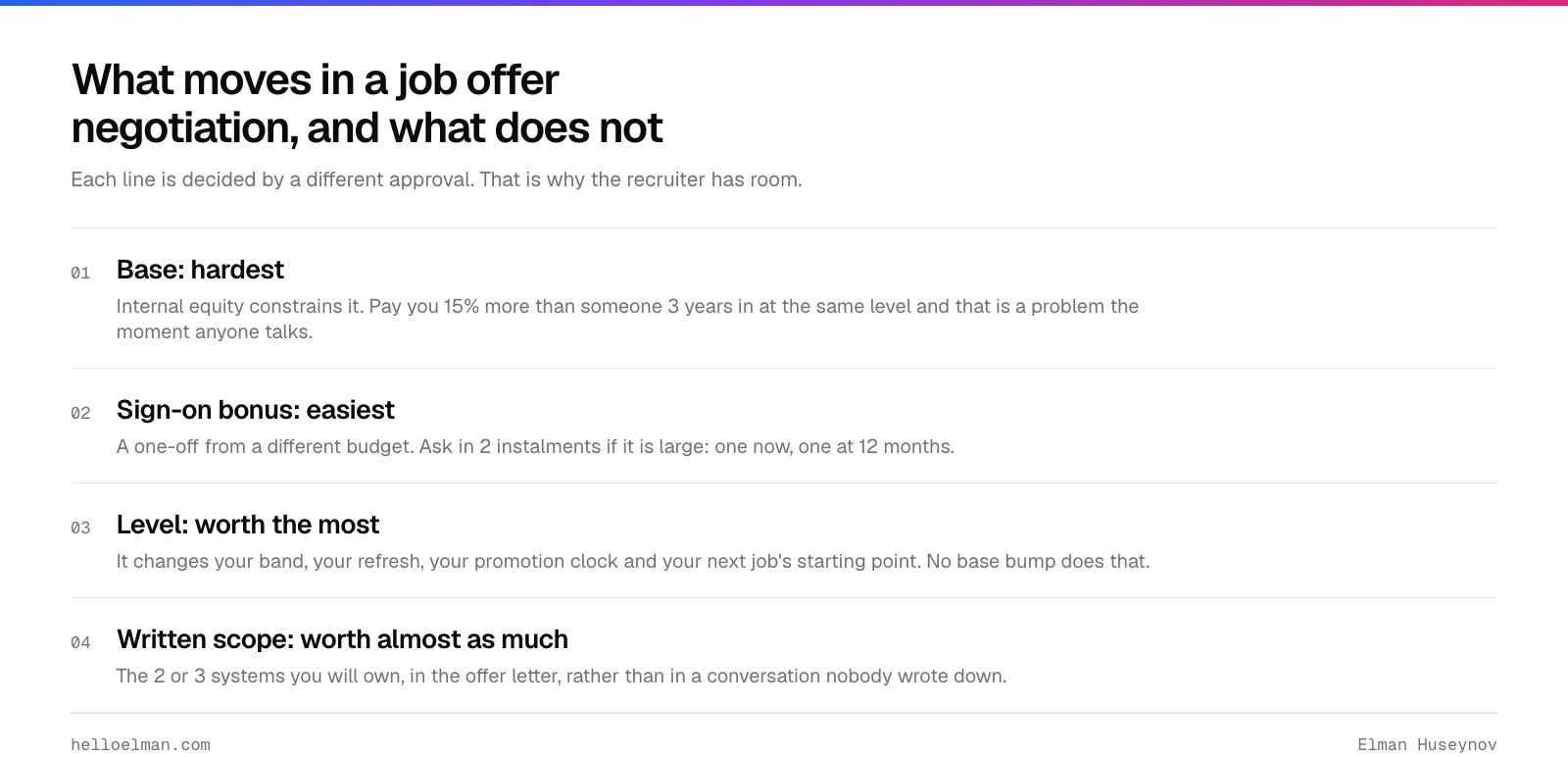
The sign-on bonus is the easiest, a one-off from a different budget. Level and written scope are worth the most.
Pick 3 things, rank them, and give 1 reason for the biggest.
Base is the line every candidate spends all their leverage on.
Pay you 15% more than someone 3 years in at the same level? There is a problem the moment anyone talks.
The recruiter therefore fights hard on base, and has room almost everywhere else.
What can a job offer negotiation move beyond base?
Each is decided by a different approval than base. That is why the recruiter has room.
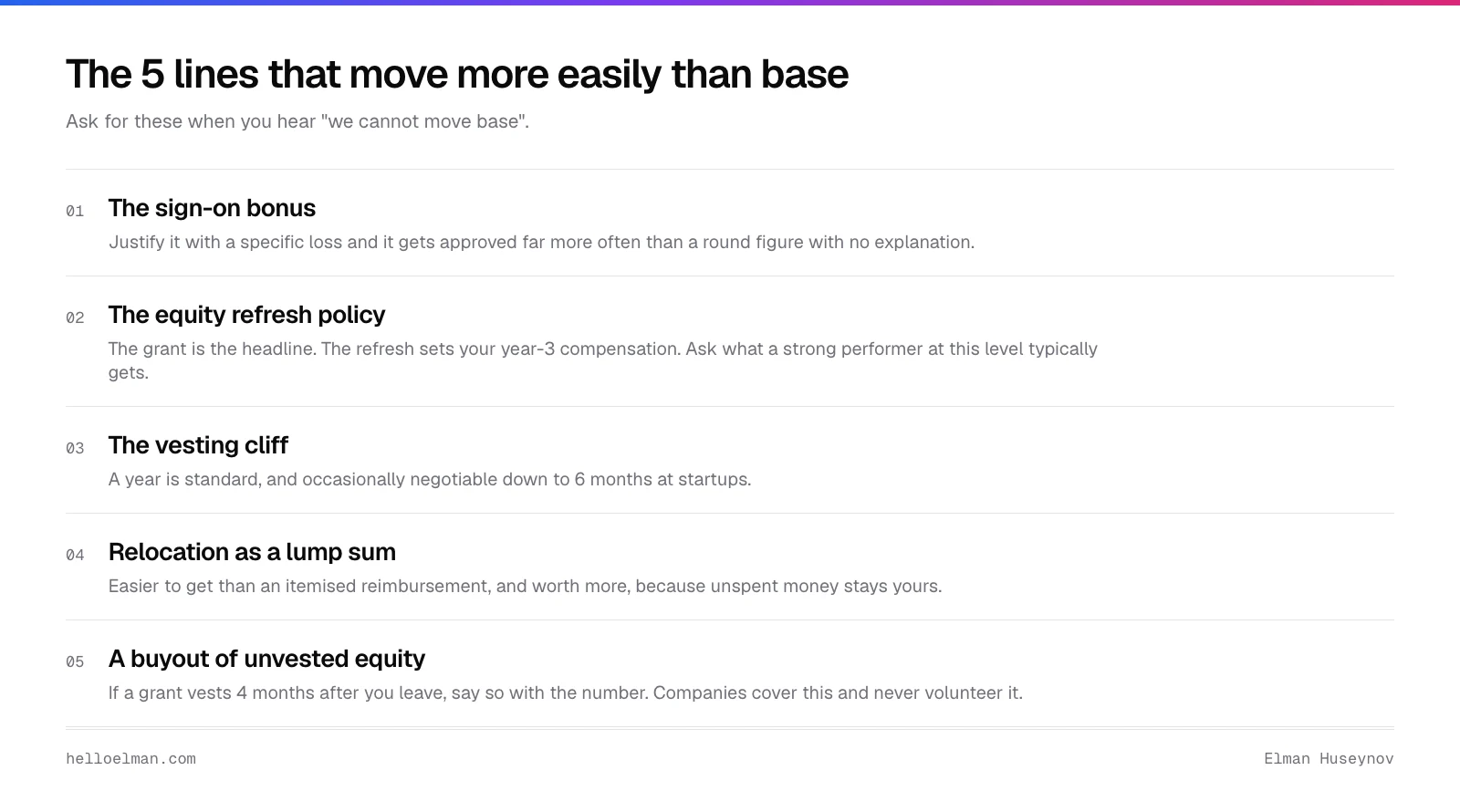
Sign-on bonus. When you hear “we cannot move base”, this is what you ask for.
Large amount? Ask for 2 instalments, 1 now and 1 at 12 months. It holds you, and it smooths your tax year.
Equity refresh policy. The grant is the headline; the refresh sets your year-3 pay. Ask what a strong performer typically gets.
Vesting cliff. A 1-year cliff is standard and occasionally moves to 6 months at startups.
Relocation. A lump sum beats itemised reimbursement. Unspent money stays yours.
Buying out unvested equity. If a grant vests 4 months after you leave, say so with the number.
Companies cover this and never volunteer it.
What is worth more than money?
The level. It changes your band, your refresh, your promotion clock, and your next job’s starting point.
If you were levelled down, say so before you discuss compensation. Point at the scope you have run.
Written scope. The 2 or 3 systems you will own, in the offer letter.
Ask for scope and next-level criteria, both written down.
Written criteria give your next promotion case something to point at.
A promotion review date. “We will formally review for the next level at 12 months” costs the company nothing.
The team. Ask about on-call load, the last 2 quarters, and who you report to.
A great offer on a team being restructured is not a great offer.
What protects your life
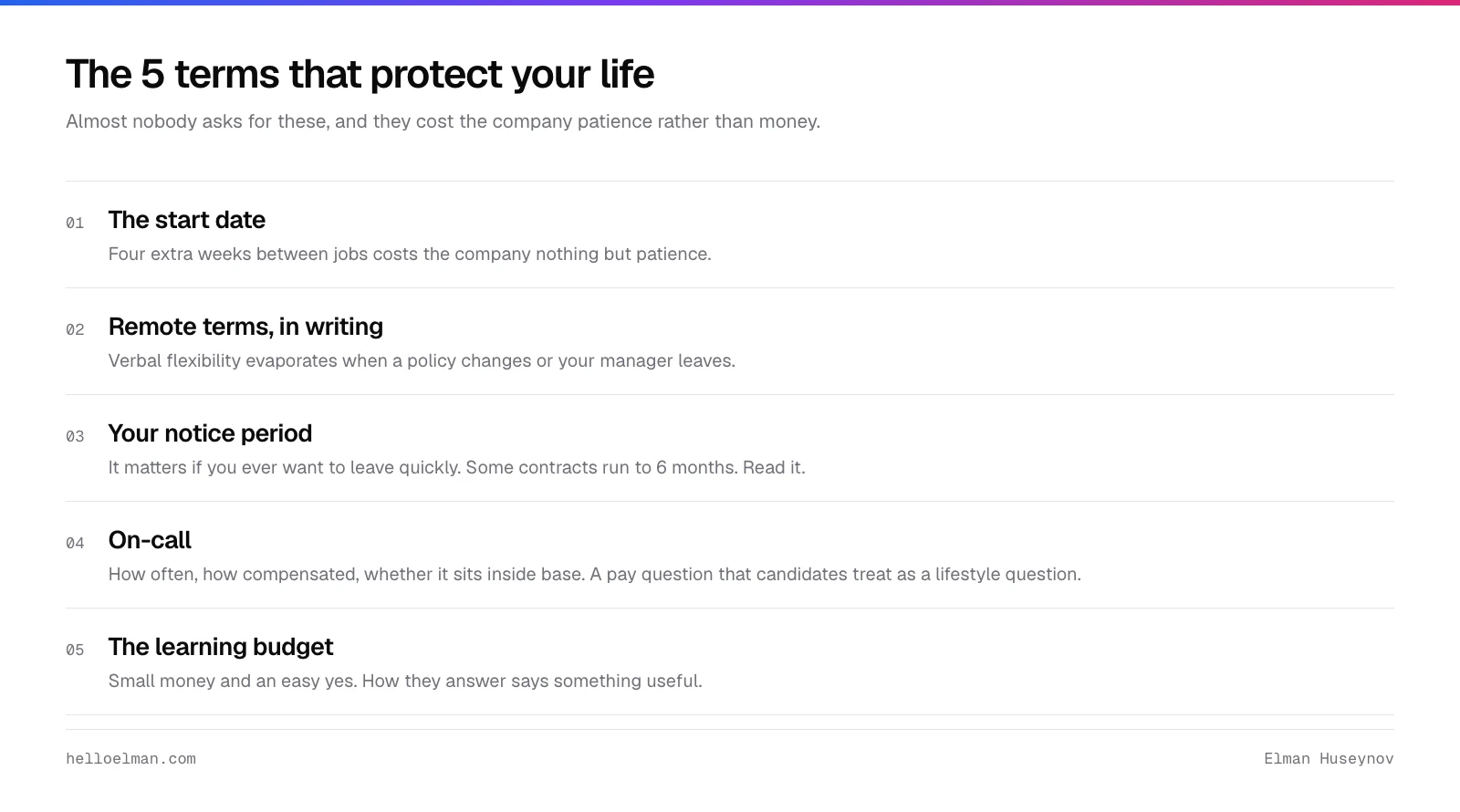
Start date. Four extra weeks between jobs costs the company nothing. Almost nobody asks.
Remote terms in writing. Verbal flexibility evaporates when a policy changes or your manager leaves.
Notice period. Some contracts have 6 months. Read it.
On-call. How often, how compensated, whether it is in base. A pay question candidates treat as a lifestyle question.
Learning budget. Small money, easy yes, and how they answer tells you something.
Job offer negotiation email example
Pick 3, rank them, and say what to trade if they cannot get everything.
A list of 12 makes them pick the cheapest 2. The rest becomes noise.
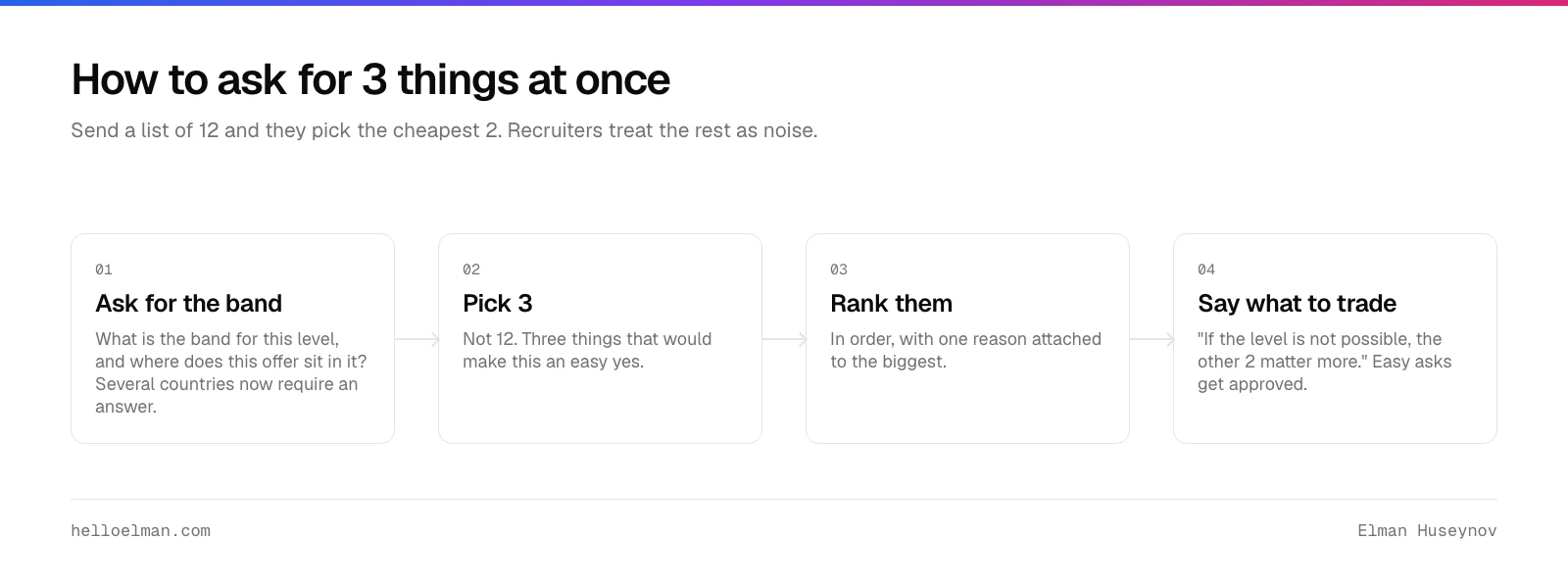
3 things would make this an easy yes, in order: I would like the level revisited given I have owned the ingestion platform end to end, a sign-on that covers the equity I am leaving behind, and a start date 4 weeks later than proposed. If the level is not possible, the other 2 matter more.
What is not worth a job offer negotiation?
Anything you do not actually want. Recruiters remember, and unused wins cost credibility.
A decorative title. At the next company the loop asks what you owned.
Things that cannot move: public-company equity bands, statutory holiday. Asking makes your real asks look unreasonable.
What is the first question in a job offer negotiation?
“What is the band for this level, and where in it does this offer sit?” Several countries now require an answer.
At the bottom, you have a factual case. At the top, spend your leverage on level or scope and stop pushing base.
Common questions
Can you negotiate after you have verbally accepted?
Technically yes, and it costs more than it gains. Reopening the negotiation after a verbal yes is what damages offers. It reads as bad faith to the hiring manager who already told their team. Get everything settled before you say yes.
How large a sign-on bonus is reasonable to ask for?
Enough to cover what you are leaving behind, stated with the number. Unvested equity, an annual bonus you forfeit by leaving in March, a relocation cost. A sign-on justified by a specific loss gets approved far more often. A round figure with no explanation rarely is.
Is asking for a promotion review date worth anything?
A review date converts a hope into a date, which is most of the value. It is not a promise of promotion and nobody should treat it as one. Pair it with written criteria. A review against an unwritten bar in 12 months is this same conversation, delayed.
How do you value equity at a private company?
Ask the last preferred price and the total shares outstanding, then do the arithmetic yourself. If they will not tell you, value it at zero and negotiate the cash. A grant you cannot price is a lottery ticket with a 4-year vesting schedule attached.
Should you always negotiate a job offer?
Almost always, but not only on base salary. Sign-on bonus, start date, level, remote days and a review date all move more easily. Ask for 2 or 3 things at once and say which matters most. One thing you should not negotiate is the level you cannot back up.
The short version
Base is the hardest line. Sign-on is the easiest. Level and written scope are worth the most.
Pick 3 things, rank them, give 1 reason for the biggest. Signal that you will sign.
Read the equity terms, the notice period and the on-call before you agree to anything.
The wider mechanics are in salary negotiation for software engineers.
To apply this to your live offer, book an offer negotiation session. Support runs until you sign.