The engineering manager interview loop is decided in the people round, not the technical one.
On this page
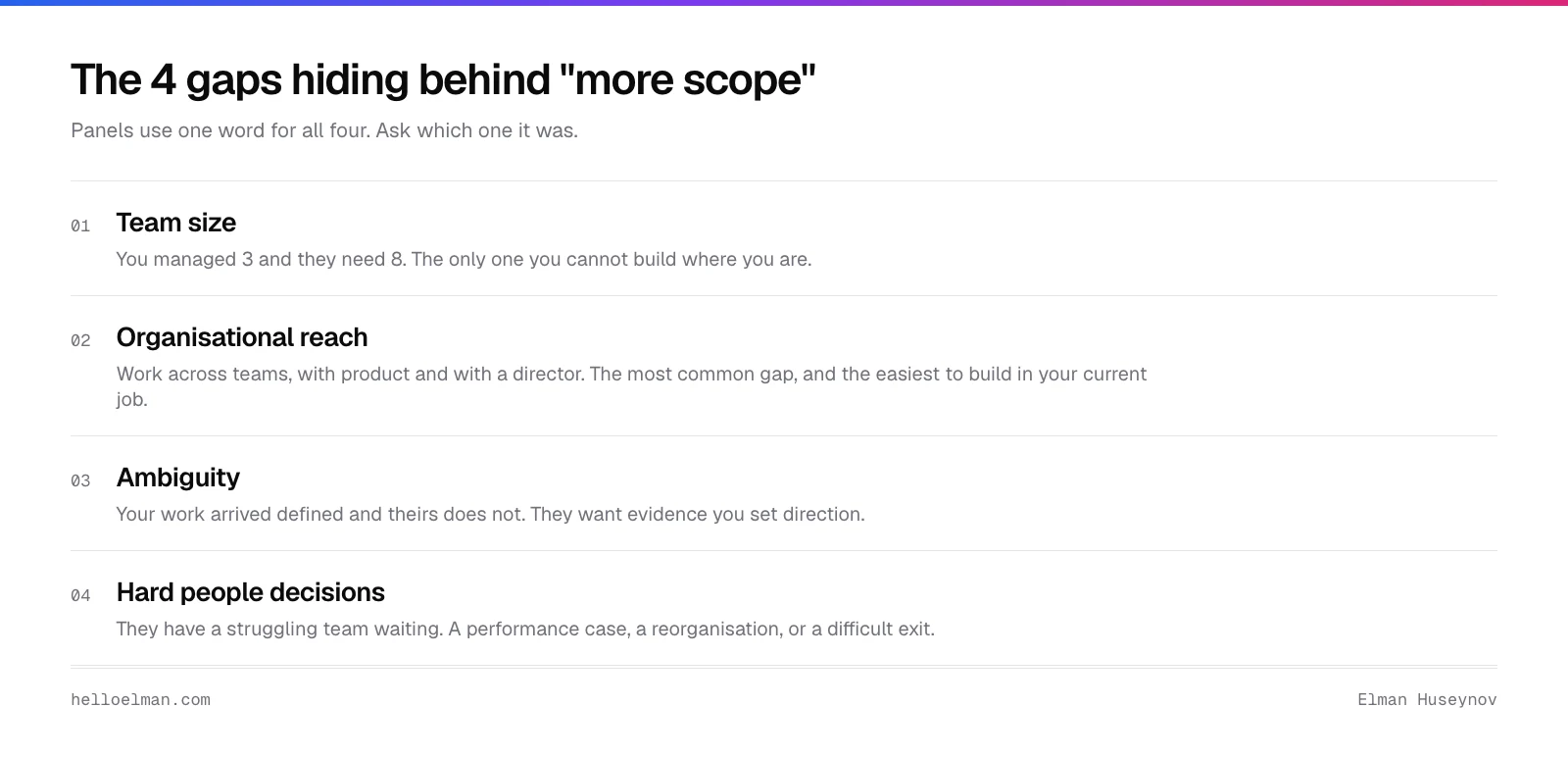
Panels reject with feedback about scope. That word covers 4 different gaps.
Team size, organisational reach, ambiguity, hard people decisions.
Ask which one it was. 3 of the 4 are buildable inside your current job.
“We are looking for someone with more scope” is the most common rejection here. Almost nobody explains it.
More scope means the panel could not picture you handling a coming situation.
The gap is fixable once you know which situations they check for.
What does each round of the engineering manager interview score?
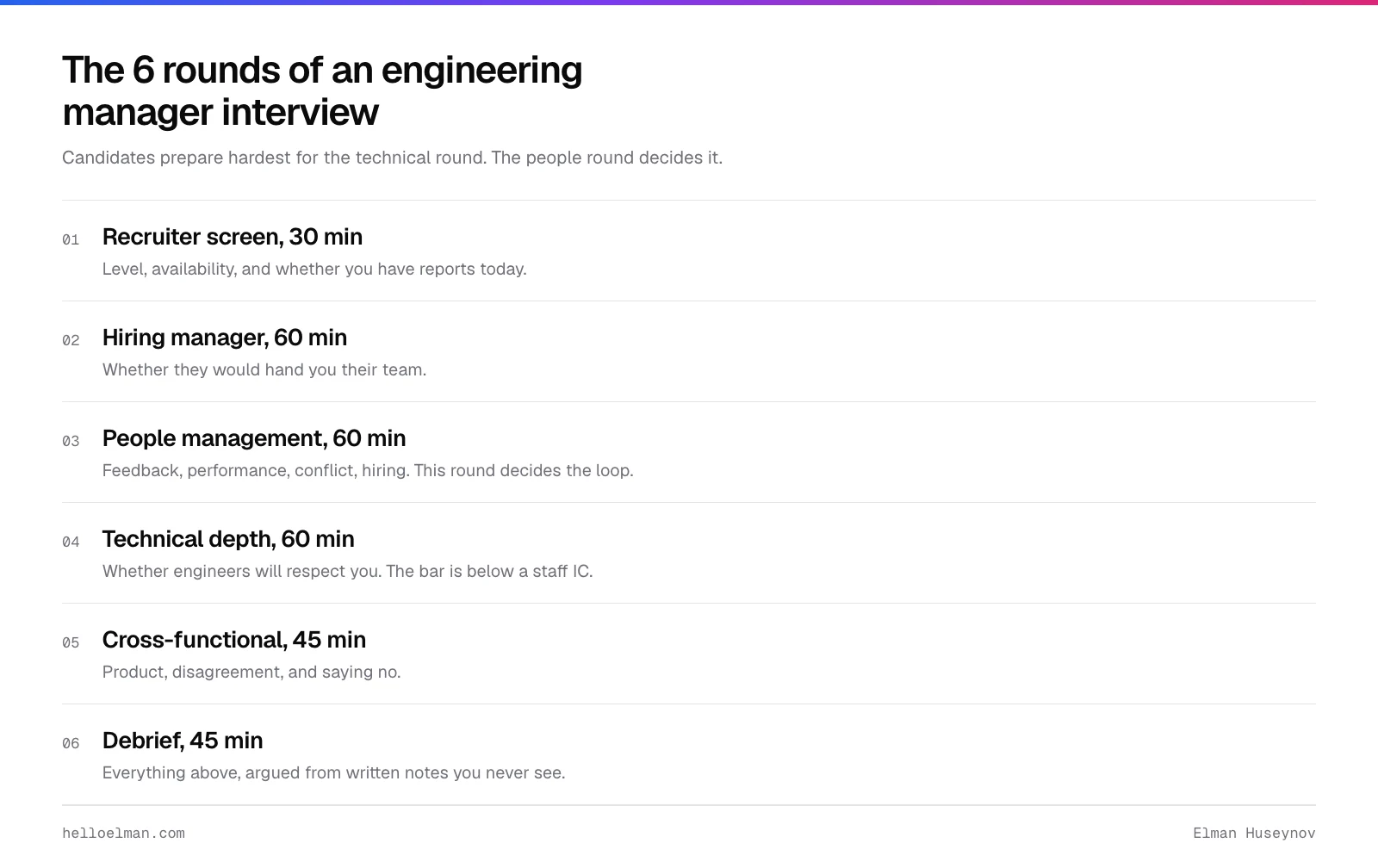
An engineering manager interview loop has 6 rounds. The technical round matters least once you clear its bar.
The people round and the hiring manager round decide most loops.
The debrief then reads the notes from all 6. Each round below scores one thing.
| Round | Length | What it scores |
|---|---|---|
| Recruiter screen | 30 min | Level, availability, whether you have reports today |
| Hiring manager | 60 min | Whether they would hand you their team |
| People management | 60 min | Feedback, performance, conflict, hiring |
| Technical depth | 60 min | Whether engineers will respect you |
| Cross-functional | 45 min | Product, disagreement, saying no |
| Debrief | 45 min | Everything above, from notes |
Candidates prepare hardest for the technical round. The debrief runs from notes, and the people round fills most of them.
Engineering manager interview questions: the people round
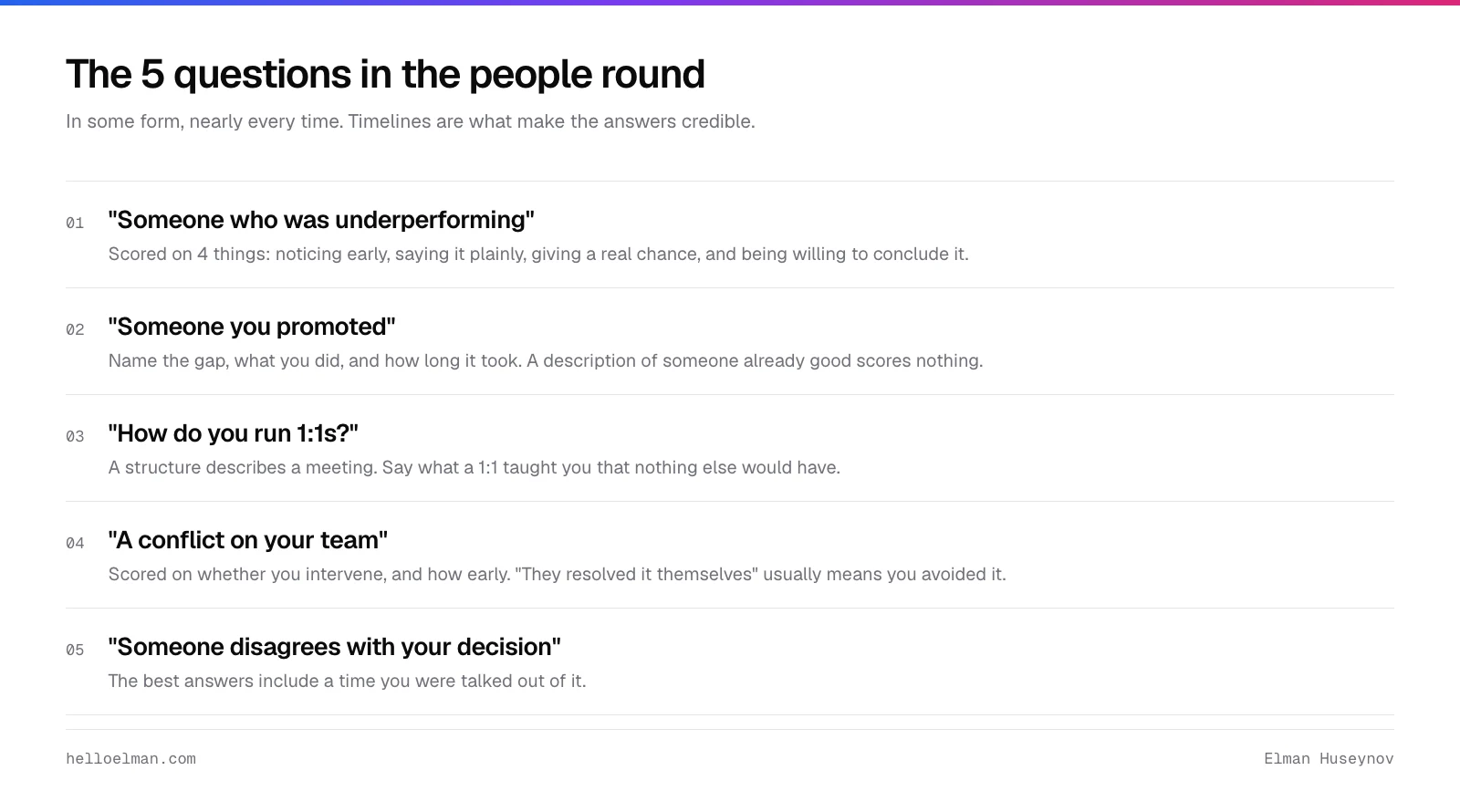
Five come up in some form nearly every time. Timelines are what make the answers credible.
“Tell me about someone who was underperforming”
Scored on 4 things. Did you notice early and say it plainly. Did you give a real chance, then conclude it.
The answer that fails is the one where everyone ended up happy.
A happy ending reads as an easy case or a cleaned-up story.
Include the timeline. When you noticed, when you first said something, how long the plan ran.
Never concluded one? Say so, and say what you would do. Pretending is worse.
“Tell me about someone you promoted”
Scores whether you can grow people and whether you know the bar.
“She was doing staff-level work with no visibility outside our team.”
“I had her present the migration plan to the platform review. The packet went in 2 quarters later.”
The weak version describes someone who was already good.
“How do you run 1:1s?”
Scores whether you get real information out of people. A structure describes a meeting.
Say what a 1:1 taught you that nothing else would have. Say what you did with it.
Mechanics in the 1:1 worth having.
“Tell me about a conflict on your team”
Scores whether you intervene, and how early.
The failure mode: 2 engineers disagreed and resolved it themselves. Sometimes true, usually a manager who avoided it.
“How do you handle someone who disagrees with your decision?”
Scores whether you can hold a line without being rigid. The best answers include a time you were talked out of it.
A manager who never changed their mind under pressure is lying, or is a problem.
What does the technical round test?
Checks that engineers will trust your judgement. The bar is below a staff IC.
Expect a system design question plus questions about technical decisions you owned.
“I do not get into the technical details” sinks people. The panel cannot tell autonomy from ignorance.
“I still review architecture decisions. I have not written production code in 18 months.”
An honest boundary is something a panel can score.
What does “more scope” mean?
Team size. You managed 3 and they need 8.
Organisational reach. Across teams, with product, with a director. The most common gap and the easiest to build where you are.
Ambiguity. Your work arrived defined and theirs does not. They want evidence you set direction.
Hard people decisions. A performance case, a reorganisation, a difficult exit. They have one waiting for you.
When you get the rejection, ask which of the 4 it was. A good recruiter will tell you.
How do you prepare for an engineering manager interview?
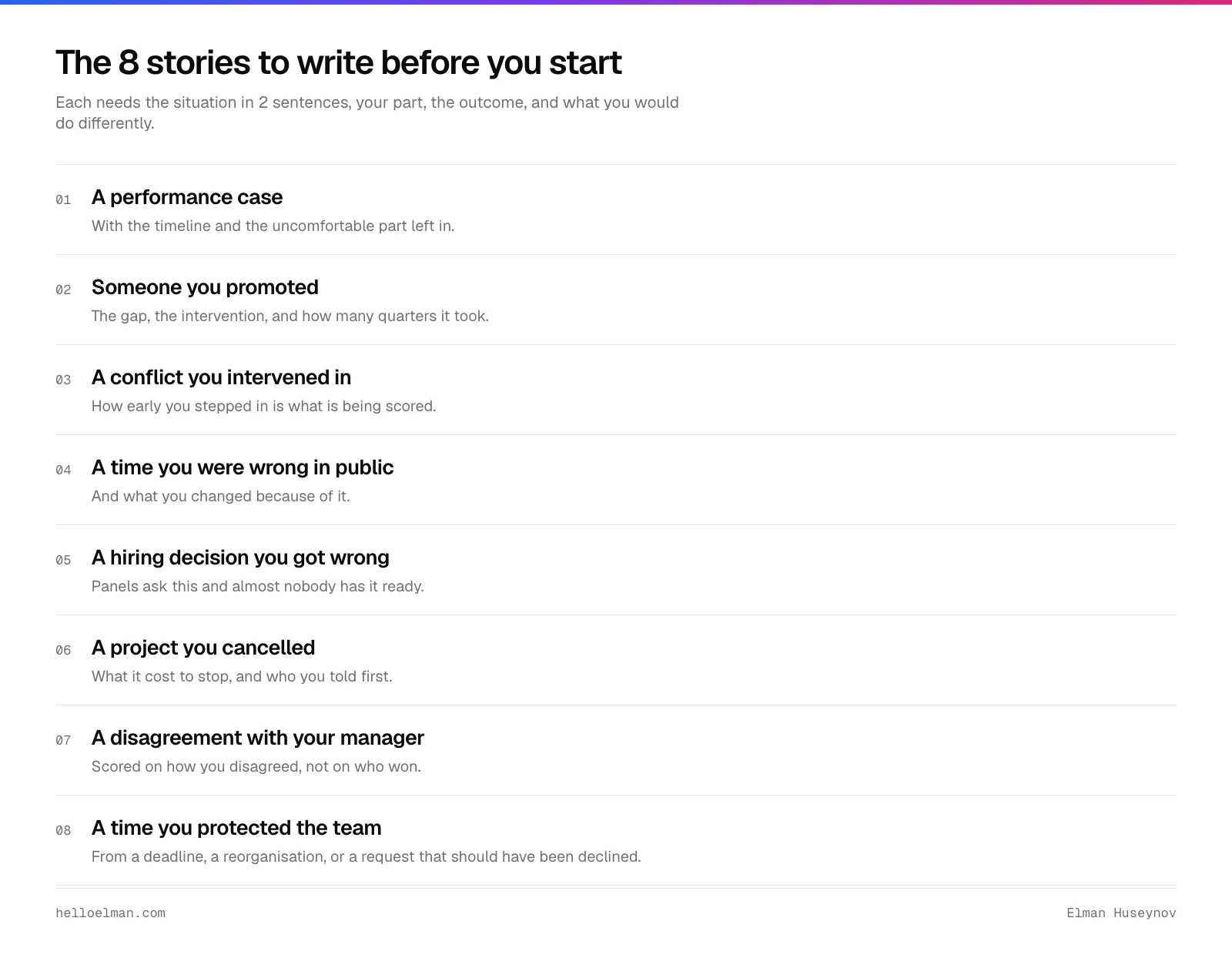
Write 8 stories before you start.
A performance case, a promotion, a conflict, a time you were wrong in public.
A bad hire, a cancelled project, a disagreement with your manager. A time you protected the team.
Each needs the situation in 2 sentences, what you did, the outcome. Then what you would do differently.
Say them out loud. Management answers fall apart in the middle. The last part separates candidates at this level.
Common questions
Can you get an EM role without having managed people before?
Yes, and usually only internally. External loops screen for reports today at the recruiter screen. The hiring team carries the risk of a first-time manager. The route that works is a tech lead role with informal reports. Then a formal conversion, then an external move 18 months later.
What if you have never had to manage someone out?
Say so directly and say what you would do. Pretending is worse, because the follow-up questions expose an invented case within 2 turns. A candidate who names the gap and describes their process scores better. An invented story falls apart under the first timeline question.
How much coding should an EM candidate still do?
Enough to have an opinion, and the panel cares more about what you let go. “I still review architecture decisions and have not written production code in 18 months.” That is a real answer they can score. Claiming to be hands-on while managing 8 people reads as untrue. Or as a warning sign.
Is it worth asking why you were rejected?
Ask which of the 4 scope gaps it was, rather than asking for feedback generally. A good recruiter answers a specific question and deflects a general one. That single question turns an unusable rejection into a plan. And 3 of the 4 answers are buildable without changing jobs.
How do you prepare for an engineering manager interview?
Prepare by round, because each one scores something different. People, technical, scope, and the hiring manager conversation. Bring specific numbers: team size, what you changed, what happened after. The common failure is claiming the team’s output as your own. That is the first thing a panel checks.
The short version
The people round decides the loop. Prepare 8 stories with timelines and the uncomfortable parts left in.
Engineers need to trust your judgement. Say what you are close to and what you let go.
When a rejection says “scope”, ask which of the 4 kinds it was. 3 of them are buildable inside your current job.
To have the loop run at you first, book the EM interview prep block.
The prep block gives a scorecard after each session. The scorer has sat on the hiring side.